

Bunk Single Beds
Bunk beds can make a big difference to the room of a child. They can keep their rooms clean, neat and organized by providing them a place to keep books, toys and other items.
However, they also create a noisy and less intimate space. It is possible to overcome this by selecting furniture that allows for design flexibility.
Size
Bunk beds are a space-saving solution to sleep multiple people in the same room. To ensure security and comfort, it is crucial to select the correct size. The dimensions of the bed must be in line with room size and ceiling height to avoid problems with mobility when moving into and out of bed. The side rails of the bunk bed need to be high enough to accommodate mattresses and should attach firmly to the frame.
Bunk single beds are generally smaller than typical single bed sizes but are still suitable for adults to use. You can pick the mattress thickness that is most suitable for your body type and sleeping needs. A thinner mattress is also frequently preferred by kids on the top bunk since it is easier to move in and out.
There are many options for the mattress size on a bunk bed including twin over full and twin over futon. These two options are great for parents who have children of various ages. Twin over full bunk bed has queen-sized mattresses at the top and a large mattress on the bottom. This is a popular choice for families with kids that are similar in age and heights. Futon bunks are another option that includes the standard top bunk as well as a lower futon that can be rearranged to serve as a bed or couch.
There is also the option of a full XL mattress for bunk beds, which is 5 inches longer than standard full mattresses. These mattresses are perfect for taller adults and teens who are sleeping in a bed by themselves.
Bunk single beds are an ideal solution for healthcare facilities where the demographics of patients change frequently. It is crucial to regularly inspect and maintain your single and bunk beds to ensure they are in compliance with the most stringent safety and comfort standards.
Bunk beds can be the ideal solution for healthcare facilities that want to maximize the space within the space of a smaller area. They are sturdy, and they offer great value because you can save room by eliminating the need for extra furniture. Bunk beds are also a great way to encourage collaboration amongst your staff and patients. This can help improve patient satisfaction and improve outcomes.
Style
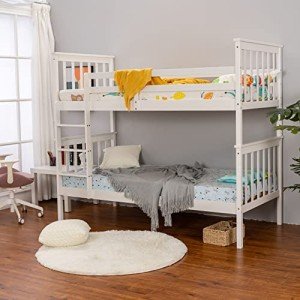
It's important to think about the design of your bunk bed or single bed, as well as the size. For example metal bunk beds are a great option for those who desire to create a more traditional appearance without sacrificing durability and strength. They also have the benefit of being easier to clean than upholstered single beds.
On the other hand single beds are typically more appropriate for rehabilitation facilities and long-term care facilities, where patient populations are stable and permanent. Although they are less cost-effective than bunk beds, they provide the same level of security and comfort and reduce the danger of falling from the top bunk.
Single beds are also less difficult to dress than bunks. Dressing a twin bed on the ground can be difficult however hanging it from a ladder and trying to fit it in a room is a completely different task! Bunk beds can be difficult to climb for children as well as those with a limited mobility.
Single beds can be decorated in a variety of ways, which allows facility managers more flexibility and helps to create a more personalised space for guests. They can be combined with furniture to make the space more inviting and comfortable. For instance the bunk bed could be paired with a desk or daybed to make the most of the available space.
It's the facility manager's responsibility to determine which bed configuration is most suitable to their particular requirements and patient population. Take into consideration the factors that are crucial to your business to make the right decision and determine the best option for your patients.
Whatever type of beds you decide to buy, be certain to regularly check and maintain them to ensure that they're secure and working correctly. This will minimize liability risks and prolong their life spans. The Journal of Facility Management notes that regular maintenance can reduce repair costs by 20 percent. Single beds and bunk beds are both excellent options to furnish facilities for behavioral healthcare, but it's important to weigh each option against your specific patient characteristics and room sizes to determine which one is the best fit for your program.
Safety
If it's a child's bedroom or a behavioral health facility, bunk single beds offer many advantages. They can maximize space and provide more storage space, but they also pose a risk to safety due to their size and height. Bunk beds require a ladder to access the bed's upper level, and children may be enticed to play on the bed or climb on the ladder. To keep everyone secure, it's essential that you teach kids how to use the ladder safely and make sure it's always safe.
Guard rails are a crucial safety feature for bunk single beds. They are designed to prevent accidents. They should be set at least 16cm higher than the surface of the bed and their gaps should not be larger than 7.5cm. There's a wealth of details on how to install your guard rails and make sure that they're compliant with safety standards by looking up the manufacturer's guidelines.
Bunk bed safety is also dependent on the appropriate bedding. Only use mattresses that meet safety standards and fit snugly on the frame. Regularly cleaning the mattress and support system can reduce the risk of injury and the possibility of entrapment.
Ladders and stairs should be sturdy options for accessing the top bunk. They must be installed firmly to minimize accidents. They should be set at an angle that blocks children from climbing over or under guardrails. Handrails should also be easy to grip. Toys and other clutter should be removed to ensure that children aren't attracted to climb them.
It is important to be aware of the difficulties that bunk beds can pose in terms of cleanliness and adopt a regular sanitation plan to ensure the highest level of hygiene. According to a study published in Infection Control Today published in the year 2010, cleaning bunk beds can take as much as 20% longer than cleaning single beds. Following these tips will help you avoid the dangers of bunk beds and provide your patients with a comfortable and warm space.
Convenience
Bunk single beds provide an easy solution for facility managers to address the space efficiency, safety of patients and comfort needs. They come in a variety of sizes to accommodate different patients. Their simple design makes them easy for facility administrators to maintain and clean.
Safety Improved: Single beds have a greater stability than bunk beds and require less structural components. This reduces the risk of falling, a major issue in hospitals. They are also more easily accessible by staff due to their low profile and simple design.
In many health care and human services situations where floor space is restricted it is crucial to maximize vertical space. Bunk single beds allow the facility to accommodate more people in the same space, which can result in cost savings. This is particularly useful for high-density building or small spaces with little floor space.
The beds are designed to provide maximum flexibility in a room, since they can be separated into two individual single beds if the child outgrows them or no longer requires sharing a room. They're great for families that anticipate changes in their children's sleeping habits as they grow older, and help reduce clutter and provide more storage space.
The lower platform can be converted into a futon during the day, which makes the most of space in a bedroom or apartment. In addition, some frames can be configured in an L-shape so that the lower bed can serve as a couch while a mattress rests on top, offering more flexibility and convenience. Bunk beds can also be equipped with integrated storage options to keep the room tidy and organized. Bunk single beds are often more expensive than traditional single beds, however they're more cost-effective in the long term because of lower maintenance costs and long-lasting durations. They're also simple to put together and disassemble, making it easy for moving and organizing. This feature can be an important aspect for facilities that frequently reorganize their rooms to match changing patient demographics and clinical requirements. single bunk beds with desk are easy to clean and sanitize which helps to maintain effective procedures for controlling infection.